

2 September 2026 · Alex Morgan
Beginner Pickleball UK: Your Complete Path to First Game
New to pickleball in the UK? Here's the path from curious to your first game: kit, finding a beginner session, what to expect and how to book a court.
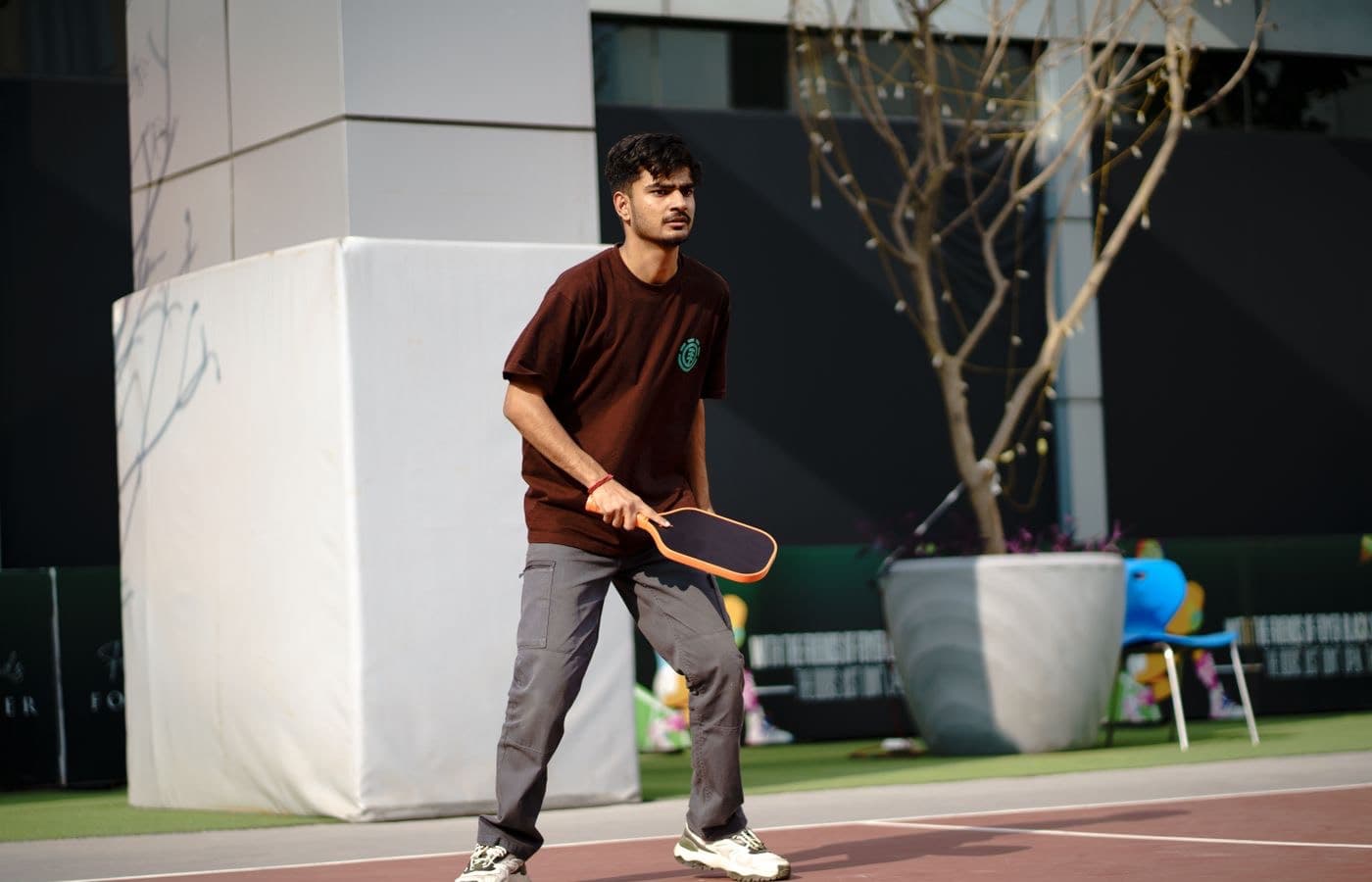
Going from "pickleball looks fun" to actually playing takes about a week and costs less than a takeaway. You don't need to buy a paddle, join a club, learn the scoring or find three friends who play. You need to find a beginner or social session near you, turn up in trainers, and let someone hand you a paddle. Everything else you'll pick up in your first hour on court. Here's the whole path, step by step.
Step 1: Understand what you're signing up for
Pickleball is played on a court 20ft by 44ft (the size of a badminton doubles court) with a solid paddle and a plastic ball with holes in it. The net sits low, at 34in in the centre. Most games are doubles, played to 11 points.
It's a lot gentler than tennis on the legs and the learning curve. The court is small, the ball is slow, and the serve is underarm, so rallies start happening almost immediately. That's the main reason people get hooked: you're playing actual points within minutes rather than spending six weeks learning to make contact.
It's still a proper workout, mind. Two hours of doubles will find muscles you'd forgotten about.
Step 2: Find a session, not a court
The single most common beginner mistake is booking an empty court. Leisure centres let you hire a court for 40 or 60 minutes, which is fine if you already have three players. On your own it gets you nowhere.
What you want is a social session or a beginners session, turn up, join the rotation, play games with whoever's there. Someone will explain the rules as you go and you'll get on court within a few minutes of arriving.
Search your town or postcode on the Pickleball Finder homepage and read the listings for anything mentioning socials, club nights or beginner sessions. Or start from your city:
- Pickleball courts in London
- Pickleball courts in Manchester
- Pickleball courts in Birmingham
- Pickleball courts in Leeds
- Pickleball courts in Glasgow
- Pickleball courts in Bristol
Venues with permanent lines and a regular timetable are usually the easiest first visit, because the setup is sorted before you arrive. Meadowbank Sports Centre in Edinburgh runs social sessions on marked indoor courts. In London, Lee Valley VeloPark has four indoor courts at the Olympic Park with group sessions as well as court hire. If you'd rather be outside, Park Sports Chiswick is floodlit and hires out paddles.
There's more detail on searching in the guide to finding pickleball courts in the UK.
Step 3: Check before you travel
Timetables move. Sessions get cancelled when the hall is booked for a badminton tournament or the school holidays kick in. Click through to the venue's own booking page and confirm this week's times before you set off.
Two other things worth checking on the listing:
- Does the venue hire paddles? Plenty do. If not, ask on the club's WhatsApp group or Facebook page. Someone will lend you a spare, they always do.
- Do you need to book? Some socials are pay on the door, others fill up online days in advance. Popular indoor slots in winter go quickly.
Step 4: What it costs
Prices vary by operator and region, so check the listing rather than trusting a number you read somewhere. Loosely, drop-in socials are often around £5-£12, and court hire varies depending on the centre and whether you're playing peak or off-peak. Paddle hire is usually a small extra or thrown in.
That's the whole outlay for your first go. Resist buying kit until you've played three or four times. You'll have far better instincts about what you want, and you'll have borrowed a few paddles by then.
Step 5: What to bring
- Trainers with non-marking soles. Court shoes or anything you'd wear for badminton. Running shoes work at a push but they're built for going forwards, and pickleball is mostly side to side.
- Water. Sports halls get warm.
- Comfortable clothes. No dress code anywhere I've played.
- Nothing else. Really.
Step 6: Your first session, honestly
Turn up ten minutes early. Tell whoever's running it that you're new. This is the important bit, because they'll put you on a court with patient people rather than the four regulars playing at pace.
Most sessions use paddle stacking: you put your paddle in a rack or a line by the net, and when a court frees up the next four paddles go on. Games are short, usually to 11, so you rarely wait long.
You'll learn three rules on the night and that's enough to play:
- The serve is underarm and goes diagonally. Contact below the waist.
- The two-bounce rule. The serve must bounce, the return must bounce, and only then can anyone volley.
- The kitchen. You can't volley while standing in the 7ft zone by the net.
That's genuinely it. Everything else (the scoring, the third shot drop, the fact that games start on a score of 0-0-2) will get explained by whoever you're playing with. Let someone else call the score for the first few games. Nobody minds.
Expect to be rubbish for about twenty minutes and then suddenly fine. The most common beginner habit is standing at the back of the court like you're playing tennis; get up towards the kitchen line when you can and your game improves immediately.
Step 7: Learn the rules properly, at home
Once you've played once, the rules make far more sense on the page. Read them in this order:
- Pickleball rules explained for UK beginners. The full picture in one go
- What is the kitchen in pickleball?. The rule that causes most arguments
- Pickleball scoring explained, why doubles uses three numbers
Read them after your first session rather than before. They'll stick much better.
Step 8: Make it a habit
The jump from "I've played once" to "I play regularly" usually comes down to one thing: getting into the club's WhatsApp group. That's where cancellations, extra sessions and spare spots get posted, and it's how you end up with people to play with.
After a month or so you'll want your own paddle. Something mid-range is plenty. You'll notice the difference from a battered hire paddle, and you won't notice the difference between £80 and £200 for a good while yet.
If you can only play once a week, make it indoors. Rain writes off outdoor courts for weeks at a time in this country, and there's nothing more deflating than a cancelled session in February.
Ready to start?
Find a session near you on the Pickleball Finder homepage, check the venue's page for this week's times, and go. Worst case you've spent a fiver on a bad evening. Far more likely, you'll be looking for a second session before the week's out.
Alex Morgan
Pickleball player & guide writer
Alex started playing pickleball in 2022 and now runs weekly social sessions across London. He writes practical, UK-focused guides for Pickleball Finder, covering rules, gear, and where to play.
More from Alex Morgan