

6 September 2026 · Alex Morgan
Pickleball Scoring Explained (UK)
Pickleball scoring explained for UK players: how to call the score, why doubles uses three numbers, side-outs, and what you need to win a game.
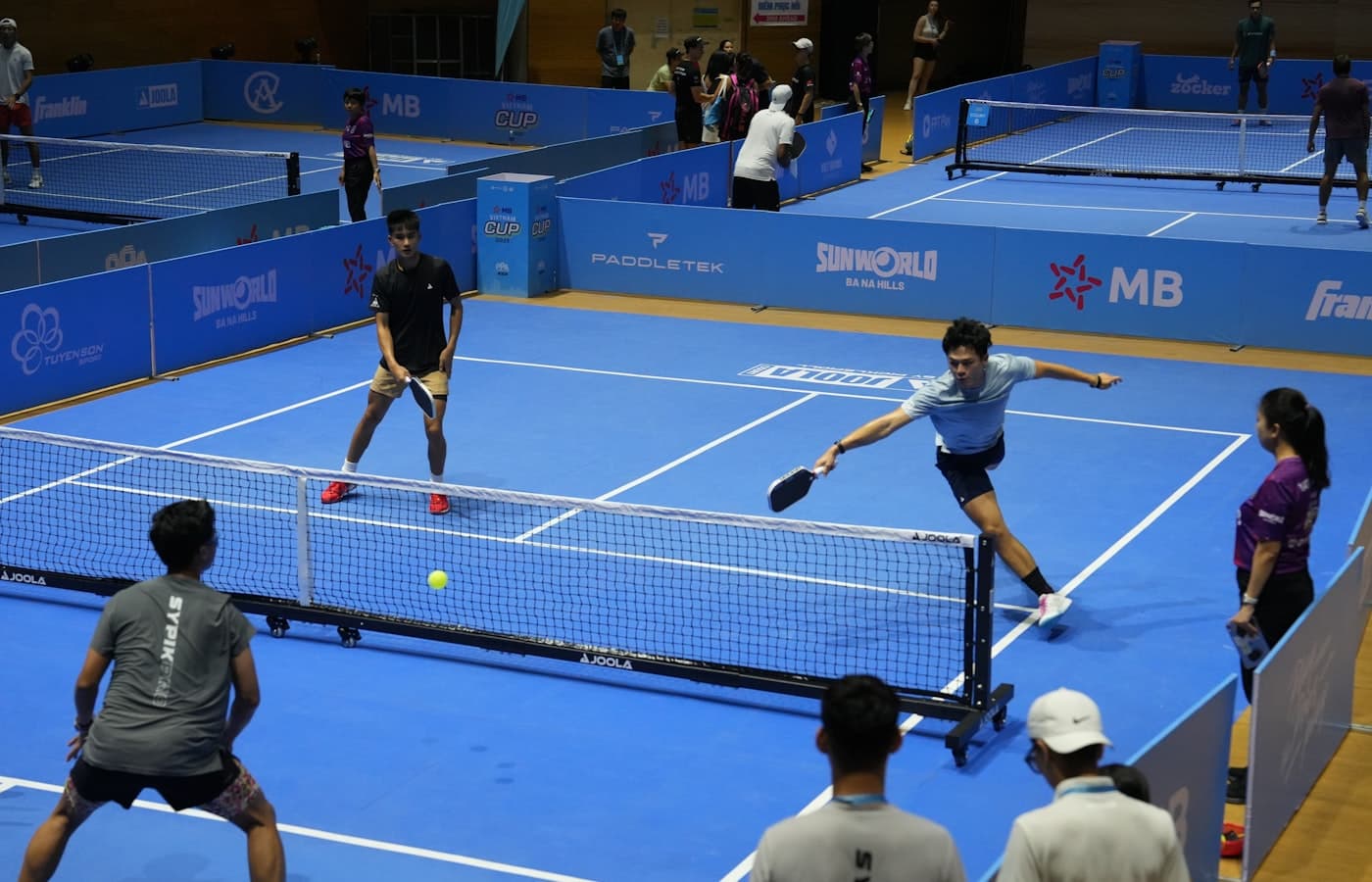
Pickleball scoring comes down to three things. Only the serving side can win points. Games go to 11, and you must win by two. And in doubles you call three numbers before every serve: your score, their score, and whether you're the first or second server. Once those click, the rest is bookkeeping.
Only the server scores
This is the part that throws anyone coming from tennis or badminton. If you're receiving and you win the rally, you don't get a point. You get the serve.
That's called a side-out. Points only accumulate for the team holding serve, which is why games swing about and why a good serving run matters so much.
Games to 11, win by two
Standard club and social play is first to 11 points with a margin of two. At 10-10 you keep going until someone's two clear, 12-10, 13-11, and so on.
Tournaments occasionally use 15 or 21 points, and some leagues run rally scoring where every rally is a point regardless of who served. You'll almost never meet either at a UK leisure centre session. Assume 11 unless someone says otherwise.
The three numbers in doubles
Before every serve, the server calls the score out loud. Something like "6-3-2" means:
| Number | Meaning |
|---|---|
| 6 | The serving team's score |
| 3 | The receiving team's score |
| 2 | This is the second server on the serving team |
The third number is only ever 1 or 2. It tells everyone how much of the serve is left before the other side gets it.
Calling the score aloud isn't just etiquette. In a rotating club session with four people who've never played together, it's the only thing stopping an argument three rallies later. Say it clearly and say it before you serve.
Both partners serve
When your team gets the serve, one player serves until your side loses a rally. Then their partner serves. That's server 2. When server 2 loses a rally, the serve passes to the opposition.
So each team normally gets two chances at the serve before a side-out. There's one exception, at the very start of a game, which is why the first call of any match is "0-0-2". That has its own explanation in why the pickleball score is called 0-0-2.
Which side do I serve from?
Position depends on your team's score, and the rule is short:
- Even score (0, 2, 4, 6...), serve from the right-hand side
- Odd score (1, 3, 5, 7...), serve from the left-hand side
You serve diagonally, into the box opposite.
Partners swap sides each time they score a point, and stay put when they don't. So if you're serving and winning points, you and your partner are switching left and right between each serve. If you lose the rally, nobody moves.
A useful check mid-game: if your team's score is even, the player who served first for your side this innings should be back on the right. If they're not, someone's drifted.
Singles scoring
Singles only uses two numbers (your score and theirs) because there's no second server. The even-right, odd-left rule still applies, and since there's only one of you, your position tells you your score. Handy when you've lost track.
A worked game
Say you're serving first in a new game:
- You call 0-0-2 and serve from the right.
- You win the rally. Now it's 1-0-2, and you and your partner swap sides. You serve from the left.
- You lose the rally. No point for them. The serve goes over, because your side started with only one server.
- They call 0-1-1 and serve.
From here on it's normal: each side gets two servers before handing over.
What people get wrong
- Assuming receivers score. They don't. Winning a rally as receiver gets you the serve, nothing more.
- Forgetting the third number. Without it nobody knows whether a side-out is coming.
- Moving after a lost rally. You only swap sides when your team scores.
- Stopping at 11-10. You need two clear.
- Not calling the score at all. Very common at socials, and the cause of most disputes.
Honestly, on your first night just let someone else keep score. Everyone does. Nobody will think less of you, and you'll pick it up faster watching than worrying.
Where to practise
Scoring only sticks once you're doing it, and a rotating social session gives you plenty of goes at it. Plenty of UK leisure centres run them (Meadowbank Sports Centre in Edinburgh has indoor courts with permanent lines and regular socials, and Bath Sports and Leisure Centre does indoor court hire with paddle rental. Fees are often somewhere around £5-£12 for a drop-in, though court hire varies) check the listing before you go.
If you're still getting to grips with the rest of the rules, pickleball rules explained for UK beginners covers serving, the kitchen and faults in one place.
Search your town on the Pickleball Finder homepage, or have a look at pickleball courts in Edinburgh, Bristol or Sheffield.
Alex Morgan
Pickleball player & guide writer
Alex started playing pickleball in 2022 and now runs weekly social sessions across London. He writes practical, UK-focused guides for Pickleball Finder, covering rules, gear, and where to play.
More from Alex Morgan